
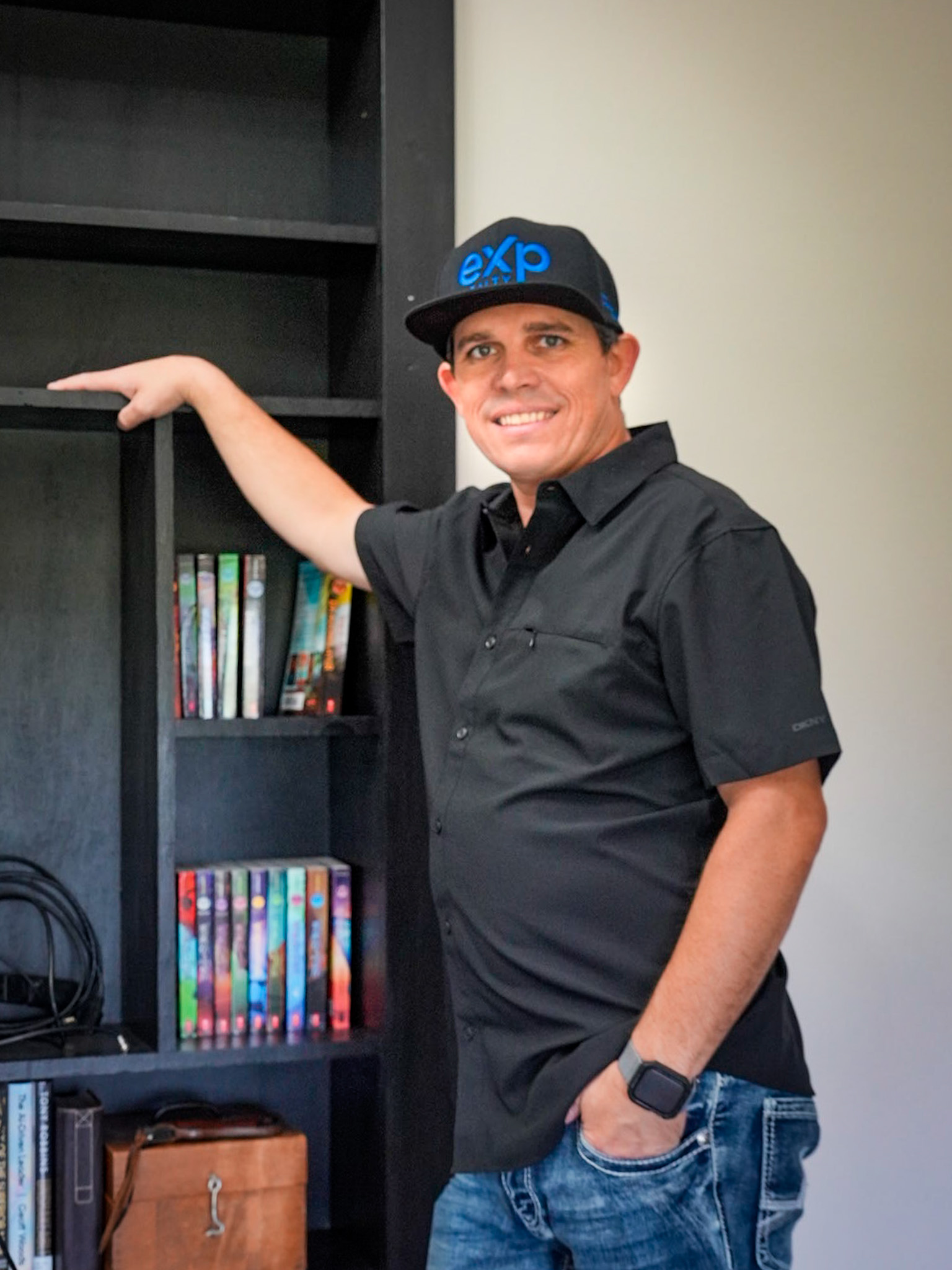
Travis Wright
Travis Wright is an eXp Realty ICON Agent and one of eXp Realty's Top 250 Individual Agents in the United States, RealTrends Verified, specializing in move-in-ready new construction in Elgin, military PCS relocation to Fort Sill, and helping Southwest Oklahoma homeowners sell their homes.
More about TravisChoosing the right mortgage lender near Fort Sill comes down to finding someone who understands VA loans, knows the local market, and can close on your timeline. Start by getting pre-approved 60 to 90 days before your PCS report date. Compare Loan Estimates from at least two or three lenders, including at least one local lender in Lawton or Southwest Oklahoma who has experience working with military families. Look for a lender who communicates clearly, returns calls promptly, and has a track record of closing on time. The lowest rate is not always the best deal, especially if the lender has a history of delayed closings or poor communication. For VA buyers, choose a lender who originates VA loans regularly, not just occasionally. For FHA, USDA, or conventional buyers, ask whether the lender has experience with the specific loan type you need in the Fort Sill market. Your real estate agent can recommend lenders who have proven reliable in past transactions.
You have your PCS orders to Fort Sill. You have started researching neighborhoods in Lawton, Elgin, Cache, and Medicine Park. You know roughly what you want in a home. But there is one decision that will shape every part of your home buying experience: choosing the right mortgage lender.
Travis Wright is a REALTOR with eXp Realty serving Lawton, Fort Sill, Elgin, Cache, Medicine Park, Fletcher, Sterling, and the surrounding Southwest Oklahoma area. He has helped military families navigate the lending process throughout their home buying journey. This guide explains what to look for in a mortgage lender, how to compare your options, and how to choose the right financing partner for your Fort Sill move.
This article is for informational purposes only and does not constitute professional, legal, or financial advice. For specific loan questions, consult with a licensed mortgage lender or your financial advisor.
Why your lender choice matters more than the rate
It is tempting to focus entirely on the interest rate when choosing a mortgage lender. A lower rate means a lower monthly payment, and that difference adds up over the life of the loan. But the rate is only one part of the equation, and for military families PCSing to Fort Sill, the lender's reliability, communication, and local expertise often matter more than an eighth of a percentage point on the rate.
Timing is everything in a PCS move. Your PCS orders have a fixed report date. If your lender delays the closing by even a week, it could disrupt your entire relocation timeline, including temporary lodging, school enrollment, and your spouse's career start date. A lender who closes on time, every time, is worth more than one who offers a slightly lower rate but has a reputation for slow processing.
VA loan expertise is not optional. If you are using a VA loan, your lender's experience with VA lending is critical. The VA has specific requirements for appraisal, property condition, and documentation that differ from conventional and FHA loans. A lender who originates VA loans regularly will navigate these requirements smoothly. A lender who processes a VA loan once a year may miss requirements, delay the closing, or deny the loan for issues that an experienced VA lender would have handled upfront. The VA loan mistakes guide covers the common pitfalls that inexperienced lenders introduce.
Local market knowledge matters. A lender who understands the Fort Sill market knows how VA appraisals work in Comanche County, what the typical closing timeline looks like in this area, and which local appraisers are reliable. They also understand the specific challenges of financing homes in this market, such as rural properties with wells and septic systems, new construction with builder incentives, and the seasonal fluctuations driven by PCS cycles. The market conditions guide explains how the local market works.
Communication during a remote move. If you are PCSing from out of state, your lender will be your primary source of status updates throughout the loan process. A lender who returns calls within hours, provides clear written updates, and proactively communicates potential issues will make your remote move far less stressful than one who leaves you wondering about the status of your application.
Types of lenders serving the Fort Sill area
Not all mortgage lenders are the same. Understanding the different types of lenders in the Fort Sill market helps you choose the right fit for your situation.
Local community banks and credit unions. Lawton and the surrounding communities have several local banks and credit unions that offer mortgage lending. These institutions know the local market, have relationships with local real estate agents and appraisers, and often provide more personalized service than national lenders. They may also offer portfolio loans (loans they keep on their books rather than selling to investors), which can provide more flexibility in underwriting. Some local credit unions specifically serve military members and their families, making them a natural fit for Fort Sill buyers.
National mortgage lenders. Large national lenders like Rocket Mortgage, LoanDepot, and New American Funding operate across the country and offer competitive rates supported by massive lending volume. They have sophisticated online platforms that make it easy to upload documents and track your application status. However, their underwriting is often centralized, meaning the person processing your loan may not understand the Fort Sill market or Oklahoma-specific requirements. National lenders can be a good option if you value a fully digital experience and competitive rates, but they may not offer the same level of local expertise as a community lender.
Mortgage brokers. A mortgage broker does not lend their own money. Instead, they shop your application to multiple wholesale lenders to find the best rate and terms for your situation. Brokers can access loan products from dozens of lenders, giving you a wider range of options than working with a single lender directly. A good broker who specializes in military relocation can be an excellent resource, especially if you have a unique financial situation or need a specific loan product. They typically charge a fee for their service, which is included in your closing costs.
Direct lenders (correspondent lenders). These lenders originate, underwrite, and fund loans directly, often using their own warehouse line of credit. They may sell the loan to investors after closing, but the underwriting and approval process stays in-house. This structure can lead to faster closings because the lender controls the entire process. Many direct lenders specialize in specific loan types, such as VA loans or new construction financing, making them a strong option for military buyers.
Builder-affiliated lenders. If you are buying a new construction home, the builder may have a preferred lender or an affiliated mortgage company. Builder lenders often offer incentives like closing cost credits, rate buydowns, or upgraded features when you use their financing. These incentives can be valuable, but it is still worth comparing the builder lender's offer with at least one outside lender to make sure you are getting a competitive rate and terms. The new construction financing guide covers how to evaluate builder lender offers.
What to look for when choosing a lender
Beyond the type of lender, there are specific qualities to evaluate when choosing who will finance your Fort Sill home purchase.
VA loan experience and volume. If you are using a VA loan, ask each lender how many VA loans they closed in the past 12 months. A lender who closes 50 or more VA loans per year has deep experience with the VA process, including the appraisal requirements, the funding fee, the Certificate of Eligibility process, and the specific documentation requirements. A lender who closes a handful of VA loans per year is more likely to make mistakes that delay your closing. Also ask whether the loan officer personally has handled VA loans for military families PCSing to Fort Sill specifically, not just VA loans in general.
Average closing time. Ask each lender what their average closing time is from application to funding. For a standard purchase in the Fort Sill market, 30 to 45 days is typical. If a lender consistently closes in 45 to 60 days or longer, that may cause problems if you have a tight PCS timeline. A lender who can close in 21 to 30 days gives you more flexibility, especially if you are buying a home close to your report date.
Communication and responsiveness. The best way to evaluate a lender's communication is to contact them before you apply. Send an email or call with a question about the loan process. How long does it take them to respond? Do they give you a clear, direct answer, or do they avoid the question? Do they follow up proactively? The way a lender treats you before you apply is a strong indicator of how they will treat you during the loan process. If they are slow to respond before you have committed, they will be even slower after you are locked in.
Availability for remote closings. If you are PCSing from out of state, ask whether the lender supports remote closings using a mobile notary or title company agent in your current location. Some lenders require you to sign closing documents in person at their office, which is impractical if you are still at your current duty station. Most lenders in the Fort Sill area are familiar with remote closings for military buyers, but confirm this before committing.
Rate lock policies. Ask about the lender's rate lock policy, including how long you can lock a rate, whether rate locks are free or have a fee, and whether the lender offers a float-down option if rates drop after you lock. For military buyers who may be house hunting weeks or months before closing, a longer rate lock (60 to 90 days) provides peace of mind that your rate will not increase while you search for the right home.
Local appraiser relationships. The VA and FHA appraiser pool in Comanche County and the surrounding area is limited. A lender who has strong relationships with local appraisers can schedule appraisals faster than one who does not. Ask the lender how quickly they can schedule an appraisal in the Fort Sill area and whether they have had issues with appraisal delays in the past. The VA appraisal guide explains how appraisals work in this market.
Pre-qualification vs. pre-approval vs. full approval
Understanding the difference between these three stages of the mortgage process is essential for timing your home search correctly.
Pre-qualification. Pre-qualification is an informal estimate of how much you can borrow based on information you provide to the lender. You tell the lender your income, assets, and debts, and they give you a rough estimate of your buying power. Pre-qualification does not require documentation or a credit check. It is a useful starting point for budgeting, but it is not a commitment from the lender and does not carry weight with sellers.
Pre-approval. Pre-approval is a formal evaluation of your creditworthiness. The lender reviews your credit report, verifies your income and assets, and issues a pre-approval letter stating the loan amount you qualify for. Pre-approval requires documentation (pay stubs, bank statements, tax returns, W-2s, and your LES for active-duty buyers) and a hard credit inquiry. A pre-approval letter shows sellers that you are a serious buyer who can obtain financing. In a competitive market near Fort Sill, a pre-approval letter is essential for making an offer that sellers will take seriously.
Full approval (clear to close). Full approval, or clear to close, means the lender has reviewed and approved your complete application, including the appraisal, title work, and all conditions. At this stage, the only remaining step is signing the closing documents and funding the loan. Full approval typically happens a few days before closing. If you are under a tight PCS timeline, ask your lender whether they can issue a conditional approval earlier in the process, which means most conditions are satisfied and only a few items remain.
When to get pre-approved for a Fort Sill move. As soon as you have your PCS orders, contact a lender for pre-approval. Getting pre-approved 60 to 90 days before your report date gives you time to shop for rates, address any credit issues, and find the right home without timeline pressure. If you are buying a home sight unseen or from out of state, pre-approval is even more important because it allows you to move quickly when the right home comes on the market.
How to compare Loan Estimates from different lenders
Once you have pre-approval letters from two or three lenders, compare their Loan Estimates to find the best overall value. The Loan Estimate is a standardized three-page form that lenders must provide within three business days of receiving your application. It makes comparing offers straightforward when you know what to look for.
Compare the interest rate and APR side by side. The interest rate determines your monthly payment. The APR includes the interest rate plus certain fees, giving you a more complete picture of the total loan cost. A lower APR generally means a lower overall cost, but pay attention to the fees that are included in the APR calculation. Some lenders include all fees, while others exclude certain items.
Compare lender fees in Section A. Section A of the Loan Estimate lists the origination charges and lender fees. This includes the loan origination fee (typically 0 to 1 percent of the loan amount), discount points (if you are buying down the rate), application fees, processing fees, and underwriting fees. Some lenders advertise a low rate but charge high origination fees to compensate. Compare the total of Section A fees across lenders to see which offer is truly the best deal.
Compare estimated cash to close. The estimated cash to close includes your down payment plus all closing costs and prepaid items (prepaid interest, property taxes, homeowners insurance, and escrow deposits). This is the amount you need to bring to closing. Compare this number across lenders, but make sure you are comparing apples to apples. Some lenders may estimate lower escrow deposits or prepaid items, which means your actual cash to close could be higher than their estimate.
Ask about rate lock timing. When comparing Loan Estimates, ask each lender when you can lock the rate and whether the rate is currently locked or floating. If you are comparing offers on the same day, the rates should be based on the same market conditions. If one lender quotes a rate that is significantly lower than others, ask whether that rate is actually available or whether it is a "teaser" rate that will increase when you lock.
Consider the total cost over your expected time in the home. A lower rate with higher fees might make sense if you plan to stay in the home for five or more years, because the monthly savings from the lower rate will eventually offset the upfront fees. A higher rate with lower fees might be better if you expect to PCS within three years, because you will not be in the home long enough to recoup the upfront costs. Military families who know they may PCS again should consider this tradeoff carefully.
Red flags to watch for when choosing a lender
Not every lender is a good fit for military buyers relocating to Fort Sill. Watch for these red flags when evaluating your options.
Guaranteed closing without reviewing your documentation. Any lender who guarantees they can close your loan without reviewing your full financial picture is not being honest. A reputable lender will ask for documentation, review your credit, and give you a realistic assessment of your timeline and approval odds. If a lender tells you what you want to hear without verifying the details, they are likely setting you up for disappointment later.
Pressure to apply before you are ready. A lender who pressures you to apply before you have your documentation ready or before you have compared other lenders is prioritizing their own pipeline over your best interest. A good lender will encourage you to shop around and will be confident that their offer stands up to comparison.
Vague answers about VA loan requirements. If you are using a VA loan and the lender cannot clearly explain the VA appraisal process, the Certificate of Eligibility requirements, or the VA funding fee, they do not have enough VA experience to handle your loan reliably. Ask specific questions about VA requirements and listen for direct, confident answers.
Poor reviews from other military families. Search for reviews from other military families who have used the lender. Look for patterns in complaints: missed closing dates, poor communication, unexpected fees, or denied loans late in the process. A few negative reviews are normal, but consistent patterns of the same complaint are a serious concern. Ask your real estate agent whether they have worked with the lender before and what their experience was like.
Unwillingness to provide a Loan Estimate in writing. Any lender who is unwilling to provide a written Loan Estimate is hiding something. If a lender gives you a verbal quote and refuses to put it in writing, move on to the next option. The Loan Estimate is your protection against bait-and-switch pricing, and a reputable lender will provide it promptly.
No local presence in the Fort Sill area. While national lenders can work well, a lender with no local presence in Lawton, Elgin, or the surrounding area may struggle with local appraisal scheduling, title company coordination, and understanding the specific requirements of the Fort Sill market. If you choose a national lender, make sure they have experience closing loans in Comanche County specifically.
Local lenders vs. national lenders near Fort Sill
The debate between local and national lenders is especially relevant for military families moving to Fort Sill. Both options have their place, and the right choice depends on your specific situation.
Advantages of local lenders in the Fort Sill area. Local lenders based in Lawton or Southwest Oklahoma understand the local market. They know which appraisers are reliable, which title companies close efficiently, and what the typical timeline looks like for a Fort Sill purchase. They have relationships with local real estate agents and can often coordinate more smoothly during the closing process. Local lenders are also more accessible for in-person meetings if you are in the area for a house-hunting trip. And because they process loans in-house, they can often close faster than national lenders who rely on centralized processing centers.
Advantages of national lenders. National lenders often have more competitive rates because of their massive lending volume. They have sophisticated online platforms that make it easy to upload documents, track your application, and communicate with your loan officer remotely. For out-of-state buyers who may never visit the Fort Sill area before closing, a national lender's digital experience can be more convenient. National lenders also have more resources for specialty loan products and may offer more rate lock options.
Which should you choose? For most military families PCSing to Fort Sill, the best approach is to get quotes from both a local lender and a national lender. Compare their Loan Estimates side by side, evaluate their responsiveness and communication, and ask about their experience with VA loans and military relocation. If the rates are similar, the local lender's market knowledge and faster closing times may give them the edge. If the national lender offers a significantly better rate and has strong VA experience, they may be the better choice. Either way, getting multiple quotes ensures you are making an informed decision.
How your PCS timeline affects lender timing
Your PCS timeline drives the mortgage timeline. Understanding how the two interact helps you plan your lender outreach at the right time.
90 to 120 days before your report date. Start researching lenders. Ask for recommendations from your real estate agent, from other military families who have moved to Fort Sill, and from online military relocation forums. Make a list of two to three lenders to interview, including at least one local lender. Call each lender and ask about their VA experience, typical closing times, and availability for remote buyers.
60 to 90 days before your report date. Get pre-approved. Contact your top choice lender and complete the pre-approval application. Have your pay stubs, W-2s, bank statements, PCS orders, and LES ready. Review the pre-approval letter carefully and ask questions about anything you do not understand. If you are pre-approved with more than one lender, compare their Loan Estimates before making a final decision.
30 to 60 days before your report date. Start house hunting. With your pre-approval in hand, you can make offers with confidence. When you find a home and go under contract, your lender will begin the full underwriting process. This is when the appraisal is ordered, your documentation is verified, and the loan is processed for final approval. Stay in close communication with your lender during this period. The guide to the period between orders and house hunting covers this stage in detail.
Within 30 days of closing. Your lender will issue a conditional approval once most conditions are satisfied. You will need to provide any additional documentation requested, such as updated bank statements or a letter of explanation for any recent deposits. Make sure your lender knows your PCS report date so they can prioritize your closing timeline accordingly.
Closing day. Your lender funds the loan, and the title company records the deed with Comanche County. If you are closing remotely, your lender will coordinate with a mobile notary or title company agent in your current location. The closing day guide explains what to expect on the day of closing.
Your next steps for finding the right lender
Choosing a mortgage lender is one of the most important decisions you will make in the home buying process. The right lender makes the process smooth, predictable, and less stressful. The wrong lender can turn a straightforward purchase into a frustrating experience that puts your PCS timeline at risk.
Start by asking for recommendations. Your real estate agent can recommend lenders who have a proven track record of closing on time for military buyers in the Fort Sill area. Other military families who have recently moved to Fort Sill can share their experiences with specific lenders. Online reviews from military relocation forums provide additional perspective.
Interview at least two or three lenders before making a decision. Ask about their VA loan experience, their average closing time, their communication practices, and their availability for remote buyers. Compare their Loan Estimates side by side, looking at the interest rate, the APR, the lender fees, and the estimated cash to close.
And remember that the lowest rate is not always the best deal. A lender who communicates clearly, closes on time, and understands the Fort Sill market is worth more than a lender who offers a slightly lower rate but delivers a stressful, delayed closing experience.
Travis helps military families navigate every step of the home buying process near Fort Sill, including connecting them with trusted lenders who have a proven track record with military buyers. If you are planning a move to Lawton, Elgin, Cache, Medicine Park, or anywhere else in Southwest Oklahoma and want to talk through your financing options, reach out anytime.
Need move-specific guidance?
Talk through your Fort Sill move with someone who knows the local tradeoffs.
Travis helps military families, out-of-state buyers, and relocation sellers sort through timelines, area choices, and next steps with clear local context.
Related reading
Keep building your relocation plan
VA vs. FHA vs. USDA vs. Conventional Loans Near Fort Sill
Compare VA, FHA, USDA, and conventional loan options for buying a home near Fort Sill. Learn which mortgage fits your situation.
How to Finance a New Construction Home Near Fort Sill
Compare construction-to-permanent loans, VA new construction financing, builder incentives, and what military buyers need to know.
First-Time Military Home Buyer Guide Near Fort Sill
A practical guide for first-time military home buyers PCSing to Fort Sill. Covers pre-approval, neighborhoods, timing, and common mistakes.
Closing Costs Near Fort Sill: A Military Buyer Budget Guide
What military buyers pay in closing costs near Fort Sill. Covers VA funding fees, title insurance, Comanche County recording, and who pays what in Oklahoma.
What VA Buyers Near Fort Sill Often Get Wrong
Five common VA loan mistakes military families make buying near Fort Sill. Covers appraisal myths, closing costs, property eligibility, and PCS timelines.