
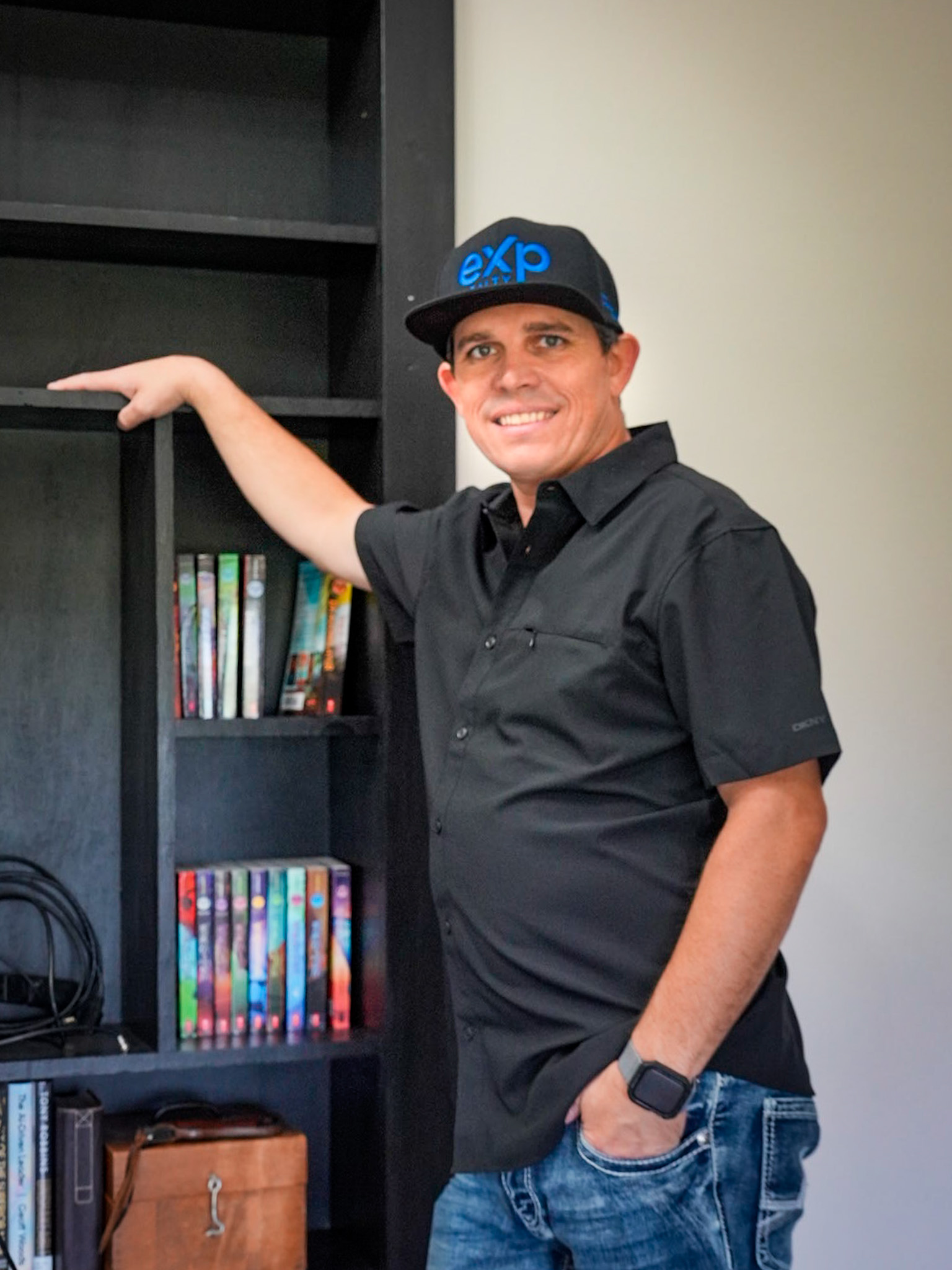
Travis Wright
Travis Wright is an eXp Realty ICON Agent and one of eXp Realty's Top 250 Individual Agents in the United States, RealTrends Verified, specializing in move-in-ready new construction in Elgin, military PCS relocation to Fort Sill, and helping Southwest Oklahoma homeowners sell their homes.
More about TravisFinancing a new construction home near Fort Sill works differently than buying an existing home. Instead of a single mortgage closing, you typically need a construction-to-permanent loan that covers the building phase and then converts to a permanent mortgage when the home is complete. Military buyers can use a VA loan for new construction, but not all lenders offer the VA construction-to-permanent product, and not every builder has experience closing VA loans on new builds. Builder preferred lenders often offer incentives like closing cost credits or rate buydowns, but you always have the right to choose your own lender. The best financing decision near Fort Sill depends on comparing the total package rate, fees, incentives, and builder compatibility against your specific PCS timeline and budget.
New construction attracts military families for good reasons: modern finishes, energy efficiency, builder warranties, and no competition from multiple buyers. But the financing side of new construction trips up many buyers because it operates differently than a standard home purchase. If you are PCSing to Fort Sill and considering a new construction home in Lawton, Elgin, Cache, or Medicine Park, understanding how construction financing works before you visit a model home saves you time, money, and frustration.
Travis Wright is a REALTOR with eXp Realty serving Lawton, Fort Sill, Elgin, Cache, Medicine Park, Fletcher, Sterling, and Southwest Oklahoma. He has helped military families navigate the new construction process from financing to final walkthrough. This guide explains the financing options available, how builder incentives work, and what to watch for when choosing a lender for your new construction home near Fort Sill.
This article is for informational purposes only and does not constitute financial or legal advice. For specific loan qualification, rates, or approval questions, consult a licensed mortgage lender or financial professional.
Why new construction financing is different from buying existing homes
When you buy an existing home near Fort Sill, the process is straightforward: you make an offer, get approved for a mortgage, and close on a specific date. The lender funds the entire purchase at closing, the seller transfers the deed, and you move in.
New construction does not work that way. The home does not exist yet. You are financing a house that will be built over several months, and the lender cannot fund a loan on a property that has no completed value. Instead, construction financing releases money in stages as the builder completes each phase of construction: foundation, framing, rough-in, drywall, and finishing. This staged funding is called a draw schedule, and it is the core difference between construction financing and a traditional mortgage.
During construction, you typically pay interest only on the amount that has been drawn so far, not on the full loan amount. This keeps your payments low during the build phase. Once construction is complete, the loan converts to a permanent mortgage, and you begin making full principal and interest payments.
Near Fort Sill, most new construction buyers use a construction-to-permanent loan, which combines both phases into a single loan with one closing. A smaller number of buyers use a construction-only loan, which covers the build and then requires a separate mortgage closing to pay it off. Construction-to-permanent is simpler and more common for military families, especially those working within a PCS timeline.
Types of construction loans available near Fort Sill
Understanding the different loan types helps you choose the right financing structure for your new construction home.
Construction-to-permanent loan (single-close). This is the most common option for new construction buyers near Fort Sill. You apply once, close once, and receive a single loan that covers both the construction phase and the permanent mortgage. During construction, you pay interest only on the drawn amount. When the home is complete, the loan automatically converts to a fixed-rate or adjustable-rate permanent mortgage. The advantage is one set of closing costs and no need to qualify for a second loan. This is the option most lenders recommend for military buyers using VA or FHA financing.
Construction-only loan (two-close). With this option, you close on a short-term construction loan that covers the build phase. When construction is complete, you apply for a separate permanent mortgage to pay off the construction loan. This involves two sets of closing costs and two qualification processes. Interest rates on construction-only loans are typically variable and higher than permanent mortgage rates. This option is less common for primary residences near Fort Sill and is more often used by custom home buyers who plan to pay cash for construction and then finance afterward, or by buyers whose lender does not offer construction-to-permanent loans.
Owner-builder loan. If you plan to act as your own general contractor and manage the construction yourself, an owner-builder loan allows you to draw funds directly. This is rare near Fort Sill for military buyers because it requires significant construction knowledge, licensing, and experience. Most military families use a licensed builder and a standard construction loan.
Renovation loan (FHA 203(k) or Fannie Mae HomeStyle). These are not construction loans but are worth mentioning because some buyers confuse them. Renovation loans finance the purchase of an existing home plus the cost of renovations. They do not apply to new construction from the ground up. If you are buying a fixer-upper in Lawton or Elgin instead of building new, a renovation loan could be an option, but that is a separate conversation from new construction financing.
For most military families building near Fort Sill, a construction-to-permanent loan delivered through a VA, FHA, USDA, or conventional program is the right starting point.
VA loans for new construction near Fort Sill
VA loans are the most popular financing option for military families PCSing to Fort Sill, and they work for new construction with important caveats.
VA construction-to-permanent loans exist. The VA guaranty applies to construction-to-permanent loans, meaning qualified veterans and active-duty service members can buy new construction with zero down payment using their VA benefit. However, not every VA-approved lender offers the construction-to-permanent product. Many lenders only offer VA loans for existing homes. When you start shopping for a lender, ask specifically: "Do you originate VA construction-to-permanent loans in Oklahoma?" If the answer is no, move on to a lender that can actually fund your new construction purchase.
The builder must be VA-compatible. The VA requires that new construction homes meet Minimum Property Requirements (MPRs) just like existing homes. For a to-be-built home, the appraiser reviews the plans and specifications before construction begins and then inspects the completed home before final approval. The builder must be willing to work with the VA appraisal process, which can be unfamiliar to builders who primarily serve conventional or cash buyers. Before signing a contract, confirm that the builder has closed VA loans before. Ask how many in the past year. A builder who knows the VA process will have a smoother closing. The builder guide covers which builders near Fort Sill are experienced with VA transactions.
The VA funding fee applies. On a VA construction-to-permanent loan, the VA funding fee is the same as on any VA purchase loan. For first-time use with zero down, the fee is 2.15% of the loan amount. For subsequent use, it is 3.3%. The fee can be financed into the loan amount or paid at closing. Buyers receiving VA disability compensation are exempt from the funding fee. The VA loan guide covers funding fee exemptions in detail.
VA appraisal for new construction. The VA appraiser reviews the builder plans, specifications, and the purchase contract to ensure the proposed construction meets MPRs and local building codes. The appraisal also establishes the estimated value based on comparable new construction and resale homes in the area. If the builder price exceeds what comparable sales support, the home may appraise low, creating a gap. Unlike with an existing home, where you can negotiate the price down or cover the difference in cash, a low appraisal on new construction may require the builder to reduce the price or you to bring additional funds. Discuss this scenario with your lender and agent before signing a contract so you know your options.
Southwest Oklahoma note: VA construction-to-permanent lenders are not as abundant in the Lawton market as conventional or FHA lenders. If you are set on using your VA benefit for new construction near Fort Sill, start your lender search early. National lenders who originate VA construction loans across multiple states may be a better fit than local lenders who only offer VA loans for existing homes. Your agent can help you identify lenders who have actually closed VA construction loans in Lawton, Elgin, or Cache, not just lenders who say they can do it.
Builder preferred lenders and incentives
Almost every new construction builder near Fort Sill has a preferred lender relationship. The builder sales representative will introduce you to their in-house or partner lender early in the process and may offer incentives for using that lender. Understanding how these relationships work helps you make an informed decision.
What builder incentives typically include. Builder preferred lender incentives vary by builder and community, but common offerings near Fort Sill include closing cost credits ($2,500 to $10,000 depending on the home price), interest rate buydowns (temporarily or permanently reducing your rate), free upgrades (appliance packages, flooring upgrades, countertop selections), and reduced lot premiums. These incentives have real dollar value, often between 1% and 3% of the home price.
Why builders offer incentives for using their lender. Builders prefer working with lenders they trust to close on time. A delayed closing caused by a lender that misses the construction completion window or fails to fund on schedule costs the builder carrying costs on the completed home. By directing buyers to a lender with a proven track record, the builder reduces the risk of delays. The lender also pays the builder a referral fee for the business, which helps offset the cost of the incentives. It is a reciprocal arrangement, not a trap. Many preferred lenders are excellent lenders who close on time and offer competitive rates.
You always have the right to choose your own lender. The Equal Credit Opportunity Act protects your right to use any lender you choose. The builder cannot require you to use their preferred lender as a condition of buying the home. However, they can tie incentives to using that lender. If you bring your own lender, you may forfeit the closing cost credit or upgrade package. The decision comes down to simple math: compare the loan estimate from the builder lender including the incentive value against the loan estimate from your independent lender without the incentive. If the builder lender total cost is lower even with a slightly higher rate, the builder lender wins. If your independent lender offers a significantly lower rate and lower fees that more than offset the incentive, bring your own lender.
Get both loan estimates in writing. Never make this decision based on verbal quotes. Ask both lenders for a formal Loan Estimate that includes the interest rate, APR, closing costs, and any credits. Compare them side by side with the same loan amount and same loan type (e.g., VA 30-year fixed with zero down). Include the builder incentive as a credit on the builder lender side. The comparison tells you the real difference in total cost over the life of the loan, not just the monthly payment difference.
Down payment and closing costs for new construction
Understanding your total cash needed at closing for a new construction home near Fort Sill requires looking at both the down payment and the closing costs, including some costs unique to new builds.
Down payment by loan type.
- VA loan: Zero down payment for qualified veterans and active-duty buyers. You can finance the VA funding fee into the loan.
- USDA loan: Zero down payment in eligible rural areas. Parts of Cache and Medicine Park qualify for USDA financing, but the property must be in a designated rural zone and meet income limits.
- FHA loan: 3.5% minimum down payment. FHA loans have lower credit score requirements than conventional loans, which helps some buyers qualify.
- Conventional loan: 3% to 5% minimum down payment for first-time buyers, but some builders may require 5% or more on new construction conventional loans. Conventional loans also require private mortgage insurance (PMI) when the down payment is below 20%.
Closing costs unique to new construction. In addition to the standard closing costs (origination fees, appraisal, title insurance, recording fees, prepaid taxes and insurance), new construction closings near Fort Sill often include:
- Builder survey cost to confirm the home sits correctly on the lot with proper setbacks and easements.
- HOA transfer fees if the community has a homeowners association that requires a capital contribution at closing.
- Comanche County recording fees for the new deed and mortgage documents.
- Interim interest from the date of closing to the end of the month on the permanent loan, even though construction may not yet be complete (this depends on how the loan is structured).
- Title insurance on a new property because the builder convey the title and the lender requires a title search and policy.
Total closing costs on a new construction home near Fort Sill typically run 2% to 5% of the loan amount, similar to an existing home purchase. The builder preferred lender incentives often reduce or eliminate the closing costs, which is why comparing total cost is essential.
Budgeting for upgrades and design selections
One of the most common mistakes military families make when financing new construction near Fort Sill is underestimating the cost of upgrades and design selections.
The builder base price includes standard finishes that are often basic. If you want upgraded flooring, granite or quartz countertops instead of laminate, a different cabinet color, an upgraded appliance package, or a storm shelter, those additions increase the home price. The total cost including upgrades determines your loan amount and your down payment.
For example, if the base price is $280,000 and you choose $15,000 in upgrades, the total purchase price becomes $295,000. Your down payment and closing costs are calculated on $295,000, not $280,000. If you are using a VA loan with zero down, this does not change your out-of-pocket down payment, but it does increase your loan amount and monthly payment. If you are using a conventional loan with 5% down, the extra $15,000 means an additional $750 of down payment plus the financing cost.
Before you start making design selections, ask the builder for a complete upgrade pricing guide. Work with your lender to understand how the upgrade cost changes your loan amount, monthly payment, and closing costs. If your budget is tight, prioritize upgrades that add long-term value or that would be expensive to change later: flooring, countertops, cabinets, and storm shelters. Defer cosmetic upgrades like paint colors, light fixtures, and landscaping that you can change more affordably after closing.
How the financing timeline works with construction
The financing timeline for new construction near Fort Sill differs from a traditional home purchase in ways that matter for your PCS planning.
Pre-approval before contract. Before you sign a builder contract, get pre-approved by a lender. The builder wants to know you are qualified before they reserve a lot and start the build process. A pre-approval letter from a lender who understands new construction financing carries more weight than a generic online pre-qualification.
Contract and deposit. When you sign the builder contract, you typically pay an earnest money deposit (often $2,000 to $10,000 depending on the builder and home price). This deposit applies toward your down payment at closing. Understand the builder refund policy before you sign. Some builders refund the full deposit if you cancel within a specified period; others deduct a percentage for lot holding costs.
Construction phase (3 to 10 months). During construction, you pay interest-only payments on the drawn amount. The lender inspects the property at each draw stage to confirm the work is complete before releasing funds to the builder. Your monthly payment during this phase is typically much lower than your permanent mortgage payment will be, because you are paying interest only and only on the amount drawn so far.
Final appraisal and closing. When construction is complete, the lender orders a final VA or conventional appraisal. The appraiser confirms the home is complete, meets all requirements, and the value supports the purchase price. If everything checks out, you close and the loan converts to the permanent mortgage. Your first full principal and interest payment is due the following month.
What happens if construction runs long. Builder contracts include provisions for weather delays, material shortages, and subcontractor availability. If construction extends beyond the estimated completion date, your interest-only payments continue until the home is ready. Your pre-approval rate lock may expire if the lock period passes. Discuss rate lock options with your lender early: some lenders offer extended rate locks of 9 to 12 months for new construction, which prevents rate increases if construction takes longer than expected. A rate lock extension may cost a small fee or a slightly higher rate, but the peace of mind during a PCS move is worth it.
How to choose a lender for new construction near Fort Sill
Choosing the right lender for new construction near Fort Sill is as important as choosing the right builder. A lender who does not understand construction financing can delay your closing, cost you rate lock extensions, and create stress during an already complicated PCS move.
Look for lenders with new construction experience. Ask potential lenders how many construction-to-permanent loans they closed in the past 12 months. If the answer is fewer than five, they may not have the operational expertise to handle the draw schedule, inspections, and builder coordination that new construction requires. A lender who processes 50 construction loans a year is a safer choice than one who processes two.
Confirm VA construction capability. If you are using a VA loan, specifically ask: "Do you originate VA construction-to-permanent loans in Oklahoma?" Some large VA lenders only do VA loans on existing homes. Getting pre-approved by a lender who cannot actually fund your new construction loan creates wasted time and a difficult conversation when you discover they cannot deliver.
Compare the builder lender and an independent lender. Get loan estimates from both. Compare the total cost including incentives, rates, fees, and the reputation for on-time closings. Ask the builder sales representative which lender they have had the best experience with, and ask your agent for their recommendation as well.
Check for local presence. A lender with a local presence in Lawton or a nearby Oklahoma city understands the Comanche County appraisal market, the local builders, and the specific closing requirements. A national lender who has never closed a VA construction loan in Comanche County may struggle with local nuances. That said, some national lenders have robust new construction divisions that handle closings across the country smoothly. The lender track record matters more than whether they have a physical office in Lawton.
Ask about rate locks for new construction. A standard 30- or 45-day rate lock does not work for new construction that takes 6 months to build. Ask about extended rate lock options specifically designed for new construction. Understand the cost of the lock extension and what happens if construction runs past the lock expiration date.
If you want to walk through your specific financing options for a new construction home near Fort Sill, reach out to Travis. He can help you explore new construction homes in Elgin and connect you with lenders who have a proven track record of closing VA construction-to-permanent loans in Lawton, Elgin, Cache, and Medicine Park.
New construction financing FAQs near Fort Sill
What is the difference between a construction loan and a traditional mortgage?
A traditional mortgage funds the entire purchase at closing in a lump sum. A construction loan funds the build in stages as work progresses, with interest-only payments during construction. When the home is complete, the construction loan converts to a permanent mortgage (construction-to-permanent) or is paid off by a separate loan (construction-only). Near Fort Sill, construction-to-permanent loans with a single closing are the most common and most practical choice for military buyers.
Can I use a VA loan for new construction near Fort Sill?
Yes. The VA offers construction-to-permanent loans for qualified veterans and active-duty buyers. Not all VA lenders offer this product, so you must specifically look for a lender that originates VA construction loans. The builder must also be willing to work with the VA process. Confirm both before signing a builder contract. The VA funding fee and zero-down option apply the same way they do on a standard VA purchase loan.
Should I use the builder preferred lender or my own lender?
It depends on the numbers. Compare loan estimates from both lenders side by side. Include the builder incentive as a credit on the builder lender side. If the builder lender total cost (rate plus closing costs minus incentive) is lower than the independent lender total cost, use the builder lender. If the independent lender offers a significantly better rate and lower fees that exceed the incentive value, bring your own lender. Do not make this decision based on assumptions. Get both estimates in writing.
How much down payment do I need for new construction near Fort Sill?
With a VA or USDA loan, zero down is possible. With FHA, 3.5% minimum. With conventional, 3% to 5% minimum depending on the lender and the builder terms. The down payment is calculated on the total purchase price including upgrades and lot premiums, not just the base price. If you choose $20,000 in upgrades, the down payment is calculated on the higher total.
What closing costs should I expect on new construction near Fort Sill?
Closing costs typically range from 2% to 5% of the loan amount. In addition to standard costs (lender fees, title insurance, appraisal, recording), new construction may include the builder survey, HOA transfer fees, and interim interest. Builder preferred lender incentives often cover or reduce these costs, which is why comparing total cost matters more than comparing the interest rate alone.
What happens if construction runs longer than expected?
Your interest-only payments continue during the extended construction period. Your rate lock may expire if the lock period passes, potentially increasing your interest rate. To protect against this, ask your lender about an extended rate lock for new construction (9 to 12 months). There may be a small cost for the extension, but it prevents rate increases if the build takes longer than planned. Discuss this before you lock your rate.
Can I negotiate builder incentives if I use my own lender?
Sometimes yes, sometimes no. Some builders will offer a reduced incentive or credit even if you use your own lender, especially if you have a strong pre-approval and a lender they know closes on time. Other builders tie the full incentive exclusively to the preferred lender. There is no harm in asking. If the builder says no, you still have the option to compare both lenders and choose the best total package.
If you are considering new construction near Fort Sill and want help evaluating the financing options, Travis would be glad to walk through the process with you. No pressure, just a clear picture of how it works in the Lawton, Elgin, Cache, and Medicine Park market.
Need move-specific guidance?
Talk through your Fort Sill move with someone who knows the local tradeoffs.
Travis helps military families, out-of-state buyers, and relocation sellers sort through timelines, area choices, and next steps with clear local context.
Related reading
Keep building your relocation plan
New Construction Builders and Communities Near Fort Sill
Learn which builders are active in Lawton, Elgin, Cache, and Medicine Park and what to look for when choosing a builder for your military family.
VA Loan Home Buying Near Fort Sill
A practical guide to VA-backed purchase loans, common mistakes, and local area tradeoffs for Fort Sill buyers.
Closing Costs Near Fort Sill: A Military Buyer Budget Guide
What military buyers pay in closing costs near Fort Sill, including VA funding fees, title insurance, and Comanche County recording fees.