
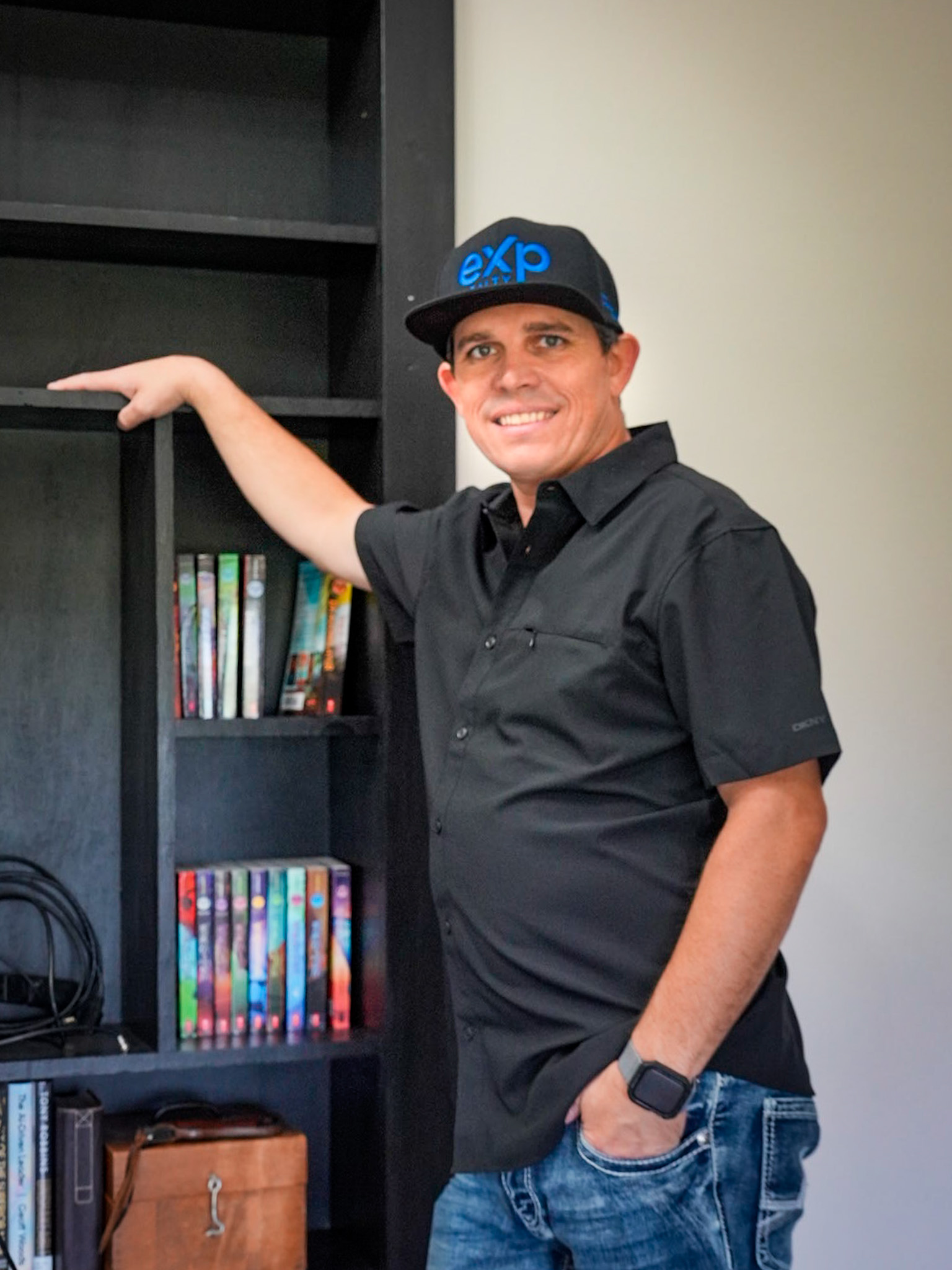
Travis Wright
Travis Wright is an eXp Realty ICON Agent and one of eXp Realty's Top 250 Individual Agents in the United States, RealTrends Verified, specializing in move-in-ready new construction in Elgin, military PCS relocation to Fort Sill, and helping Southwest Oklahoma homeowners sell their homes.
More about TravisBuilding a custom home in Southwest Oklahoma typically takes 12 to 18 months from the day you start looking at land to the day you receive your keys. The construction phase itself runs 8 to 12 months, depending on weather, builder schedule, and design complexity. Custom home building in the Lawton area follows a predictable sequence: land acquisition, builder selection, design and engineering, permitting, foundation, framing, mechanical rough-ins, insulation and drywall, interior finishes, and final walkthrough. Every step in that sequence matters, and knowing what to expect at each stage helps you budget your time and money realistically. Southwest Oklahoma offers unique advantages for custom building, including lower land costs, a growing pool of experienced builders, and the freedom to build on acreage in communities like Cache, Fletcher, Sterling, or Medicine Park.
You have looked at every home on the market near Fort Sill. You have toured the new subdivisions in Elgin, walked through the established neighborhoods in Lawton, and driven the winding roads of Medicine Park. And yet, nothing checks all the boxes. The layout is close but not right. The lot is smaller than you want. The kitchen flows the wrong direction. The master bath is tucked in a corner that makes no sense for your family.
That is the moment when custom home building becomes worth considering. Instead of settling for the closest approximation, you build exactly what you want, on the piece of land you choose, with the finishes and systems that match your priorities. It is a bigger upfront investment of time and attention, but the result is a home that fits your life rather than the other way around.
In Southwest Oklahoma, Travis Wright serves as your dedicated advisor for the home buying and land purchase side of the process, helping you evaluate lots, understand local builder reputations, and navigate contracts. However, Travis is not a contractor, engineer, inspector, appraiser, tax professional, or attorney. For construction advice, structural engineering, official inspections, tax implications, or legal review of building contracts, always consult the appropriate licensed professional alongside your plan.
Custom Home vs. Spec Home vs. Production Build
Before you dive into the process, it helps to understand what kind of new construction you are actually pursuing. The terms get used interchangeably, but they mean different things when it comes to cost, timeline, and your level of involvement.
A production build is what you find in a subdivision like those in Elgin or north Lawton. A developer buys a tract of land, divides it into lots, and a production builder erects homes from a set of pre-approved floor plans. You pick from a menu of options a kitchen counter finish, a flooring upgrade, a storm shelter add-on. The process is efficient, the timeline is predictable, and the cost per square foot is lower because the builder buys materials in bulk. But you are limited to what the developer offers.
A spec home sits in between. A builder purchases a lot, builds a home based on their own design decisions, and puts it on the market as a finished product. You buy it like any existing home, but everything is brand new and unworn. The advantage is speed: you can close in 30 to 45 days versus waiting a year. The tradeoff is that the builder chose the layout, the flooring, the cabinets, and the fixtures. If you love what they picked, a spec home is a great deal. If you wish they had done something different, you live with someone else's decisions.
A true custom home is built from scratch for you. You select the land, hire an architect or work with a builder's design team, choose every finish from the foundation type to the faucet handles, and oversee a construction process that produces a house no one else has. The timeline is longer, the cost per square foot is higher, and you carry more of the project management mental load. But the result is a home that reflects how you actually live, not how a developer assumed a generic family lives.
If you are new to the area, our guide to Elgin new construction covers production builds in depth. This article focuses on the custom and semi-custom path, which is more common on acreage lots in Cache, Fletcher, Sterling, and rural Medicine Park.
Finding and Buying Land in Comanche County
Custom home building starts with dirt. The piece of land you choose determines everything that follows: the style of home you can build, the cost of the foundation, the availability of utilities, the commute to Fort Sill, and the school district your children attend.
Southwest Oklahoma offers a wide range of lot types. In Lawton proper, you can find infill lots in established neighborhoods where existing infrastructure is already in place. In Elgin and Cache, new subdivisions offer pre-platted lots with ready-to-build utility hookups. In Fletcher, Sterling, and the rural areas around Medicine Park, you are looking at acreage parcels that may require well and septic systems.
Here is what to verify before you buy land:
Utility availability. Is municipal water and sewer available at the lot line, or will you need a well and septic system? If the lot is on rural acreage, factor in the cost of drilling a well (typically $5,000 to $12,000 in Southwest Oklahoma) and installing an aerobic septic system ($6,000 to $10,000). Also check for natural gas availability; many rural lots use propane tanks instead.
Zoning and restrictions. Even rural lots can have county zoning rules, minimum square footage requirements, setback lines, and easements. If the lot is in a platted subdivision, review the Covenants, Conditions, and Restrictions (CC&Rs) before you buy. Some restrict manufactured homes, metal roofs, fence types, or even the color palette of exterior paint.
Soil conditions. Southwest Oklahoma sits on expansive clay soils. A geotechnical soil test, usually costing $500 to $1,000, will tell you whether the lot needs soil pretreatment, a deeper foundation, or a post-tension slab. Skipping the soil test is one of the most expensive mistakes you can make on a custom build.
Access and easements. Does the lot have legal road access? Is there a recorded easement for a shared driveway? If the property is landlocked, you will need to negotiate an access agreement with the neighboring landowner before you can build.
I help buyers evaluate lots across Comanche County, connecting land searches with the bigger picture of commute times, school zones, and resale potential. Reach out before you make an offer on a lot, and I will help you assess whether the land fits your long-term plan.
How to Choose a Custom Home Builder
Your builder is the single most important decision in the entire custom home process. A great builder makes the experience enjoyable and produces a home that holds its value. A poor choice leads to budget overruns, missed deadlines, and a stressful year of your life.
In Southwest Oklahoma, builders range from small family operations that build two or three homes a year to larger firms that handle multiple projects simultaneously. Neither size is inherently better, but each comes with different tradeoffs in availability, communication style, and pricing.
Here is how to evaluate a builder before you sign a contract:
Visit their completed homes. Ask for addresses of homes they finished in the last 12 months. Drive by. Look at the landscaping grading, the driveway finish, the roof line, and the gutters. If possible, ask the homeowner whether they would build with that builder again.
Talk to their subcontractors. Builders rely on subcontracted crews for framing, plumbing, electrical, HVAC, and finishes. A builder who works with the same subs year after year is generally more reliable than one who hires the lowest bidder on every job.
Review their warranty process. Oklahoma law requires a one-year builder warranty on new construction, and reputable builders offer a 10-year structural warranty through a third-party provider like the Residential Warranty Corporation or 2-10 Home Buyers Warranty. Ask how warranty claims are handled. A builder who resists warranty calls during the sales process will be harder to reach after you close.
Get referrals from the community. The Southwest Oklahoma Home Builders Association, based in Lawton, maintains a directory of member builders. Local real estate agents, title companies, and building supply vendors also know which builders deliver quality and which ones generate complaints.
Understand what is included and what is not. Builder quotes often exclude site preparation, driveway paving, landscaping, fencing, window coverings, and appliance purchases. Get every exclusion in writing so your budget is based on reality, not assumptions.
Financing Your Custom Build: Construction Loans
Financing a custom build works differently than buying an existing home. You cannot get a standard mortgage for a house that does not exist yet. Instead, you need a construction loan, which converts into a permanent mortgage after the home is complete.
The most common option is a construction-to-permanent loan, sometimes called a single-close loan. You apply once, close once, and the loan covers both the construction phase and the permanent mortgage after completion. During construction, the lender disburses funds in draws as milestones are met: foundation pour, framing complete, drywall hung, and so on. You pay interest only on the drawn amount during construction, then the loan converts to a standard amortizing mortgage when you move in.
For military buyers and veterans, VA construction loans are available. The VA one-time close construction-to-permanent loan lets eligible borrowers finance the lot purchase, construction costs, and permanent mortgage in a single closing. The process requires the builder to be VA-registered, and the plans must meet VA Minimum Property Requirements before construction begins. This is a different product than the standard VA purchase loan, and not all lenders offer it, so finding a lender experienced with VA construction lending is essential.
FHA construction loans and USDA construction loans also exist for buyers who qualify. The USDA program is particularly relevant in rural areas of Comanche County, Cache, Fletcher, and Sterling, where USDA-eligible properties are common. Both programs require the builder to meet federal standards and the home to comply with the respective agency's property requirements.
Conventional construction loans typically require a larger down payment, often 20 percent, and higher credit scores. They may be the right fit for buyers who do not qualify for government-backed programs or who are building a second home or investment property.
Whichever route you take, get pre-approved for the construction loan before you start looking at land. Sellers of desirable lots want to see that you can actually close, and a pre-approval letter from a local lender gives your offer credibility.
The Construction Timeline: What Happens When
Understanding the construction timeline helps you plan your living situation, budget for interim housing, and set realistic expectations with your family. Here is how a typical custom build unfolds in Southwest Oklahoma:
Pre-Construction (2 to 4 months). This phase includes land acquisition, architectural design and engineering, material selections, permit applications, and finalizing the construction contract. If you are building on acreage, this phase also includes surveying, soil testing, and site planning.
Permitting and Site Preparation (4 to 8 weeks). Once the design is finalized, the builder submits plans to the local jurisdiction for building permits. In Comanche County and most incorporated cities, this takes one to two months depending on workload. Meanwhile, the site is cleared, graded, and staked. Utility connections are arranged. If the lot requires a septic system, the perc test and system design happen here.
Foundation (3 to 5 weeks). This starts with excavation and footing placement, followed by steel reinforcement, in-floor plumbing rough-ins, and the concrete pour. The foundation cures for at least seven days before framing begins. In Oklahoma's clay soil, a post-tension slab is common and takes a few extra days for cable tensioning.
Framing (4 to 8 weeks). The fastest phase in terms of visible progress. Walls go up, roof trusses are set, windows and exterior doors are installed, and the home is dried in with sheathing and roofing felt. By the end of this phase, you can walk through every room and feel the actual size and flow of the floor plan.
Rough-In Mechanicals (3 to 5 weeks). After framing but before insulation, the plumber, electrician, and HVAC contractor run their lines through the walls and ceiling. This is the last time you will see the inside of your walls before they are sealed, and it is the most important milestone for independent inspections. Catching a plumbing vent run incorrectly or an HVAC duct that is undersized for the room at this stage saves thousands in retrofit costs.
Insulation and Drywall (3 to 5 weeks). Once the rough-ins pass inspection, insulation is installed, drywall is hung, taped, and mudded. This phase transforms the house from a structural shell into rooms that look like a real home.
Interior Finishes (6 to 10 weeks). The longest and most detail-intensive phase. Cabinet installation, countertop templating and fabrication, flooring, trim work, paint, interior doors, plumbing fixtures, lighting fixtures, and appliance installation all happen in a carefully choreographed sequence. Material delays at this stage are common, especially for custom countertops or specialty lighting.
Final Walkthrough and Closing (2 to 4 weeks). The builder completes the punch list, the lender orders the final appraisal, the county issues the certificate of occupancy, and you do your final walkthrough. After closing, the construction loan converts to a permanent mortgage and you get the keys.
Design Selections: Where Your Money Goes
Your design selections are where a custom build either stays on budget or spirals. The base price quoted by the builder covers a standard level of finishes. Everything above that baseline is an upgrade, and upgrades add up fast.
The most common budget pressure points are kitchen countertops (granite versus quartz versus marble), cabinetry grade and configuration, flooring (luxury vinyl plank versus engineered hardwood versus tile), and lighting fixtures. A seemingly minor choice like upgrading from a standard fiberglass tub to a freestanding soaking tub can add $1,500 to $3,000 by the time you factor in floor reinforcement, plumbing relocation, and the fixture itself.
Here is practical advice for staying in control: start a selection spreadsheet the day you choose a builder. List every finish category, the standard allowance, the upgrade cost, and whether it is a must-have or a nice-to-have. Share it with your builder and your lender so everyone is working from the same set of assumptions. When the selection appointments arrive, you will have a clear framework for saying yes to what matters and passing on what does not.
Oklahoma-Specific Building Considerations
Building in Southwest Oklahoma comes with local conditions that affect every stage of the process. Accounting for them upfront prevents costly surprises.
Clay soil and foundation design. As noted in our Elgin new construction guide, Southwest Oklahoma sits on expansive clay that shifts with moisture content. A proper foundation design, whether post-tension slab or deep pier-and-beam, is non-negotiable. Budget for a geotechnical report before the foundation is poured, and budget for foundation watering as a permanent home maintenance cost after you move in.
Storm shelters and safe rooms. In-law and above-ground storm shelters are standard additions in new custom homes across Comanche County. An in-garage safe room adds $4,000 to $8,000 and can double as a secure storage closet. A poured-concrete underground shelter in the backyard runs $6,000 to $12,000. Many buyers consider this a non-negotiable expense given Oklahoma's tornado history.
Energy efficiency and insulation. Oklahoma summers push air conditioning systems hard. Spray foam insulation, radiant barrier roof sheathing, and high-SEER HVAC systems cost more upfront but reduce cooling bills significantly over the life of the home. New energy codes adopted in Oklahoma now require tighter building envelopes, which makes these upgrades even more impactful.
Roofing and wind resistance. Hail and high winds are annual realities. Architectural shingles with a Class 4 impact rating cost more but survive hailstorms that would destroy standard three-tab shingles. Reinforced roof truss clips that anchor the roof to the walls provide extra protection during severe weather events.
Final Walkthrough and Closing on a Custom Home
When the builder calls and says the home is ready for your final walkthrough, resist the urge to rush. Your final walkthrough is literally the last chance to identify issues before the home is legally yours.
Bring your selection sheet, the approved plans, and a notebook. Check every room against the plan: are the outlets where you expected? Is the plumbing layout correct? Do the windows open and close properly? Test every appliance, every faucet, every light switch, and every door. Walk the exterior to confirm grading slopes away from the foundation and that the sod or seeded lawn is established. Test the garage door opener, the storm shelter door, and the HVAC system in both heating and cooling modes.
Create a punch list of items that need correction. Reputable builders expect this and schedule a walkthrough specifically for this purpose. Some items may be trivial like a paint touch-up or a cabinet adjustment. Others, like incorrect window specifications or missing insulation in the attic, require more attention. Do not let the excitement of a nearly finished home push you to sign off on items that are not complete.
Once the punch list is resolved and the certificate of occupancy is issued, the lender funds the permanent loan, the builder is paid, and the home is yours. At that point, the warranty periods begin, and you start the next chapter: settling into a home that was built specifically for you.
Thinking about building a custom home in Southwest Oklahoma? Whether you are considering acreage in Cache, a lot in Fletcher, or a rural parcel near Medicine Park, I can help you evaluate the land, connect with reputable builders, and plan the financing. Contact Travis Wright for a consultation that covers your timeline, budget, and long-term goals.
Need move-specific guidance?
Talk through your Fort Sill move with someone who knows the local tradeoffs.
Travis helps military families, out-of-state buyers, and relocation sellers sort through timelines, area choices, and next steps with clear local context.
Related reading
Keep building your relocation plan
Buying Elgin New Construction: Builder Incentives & VA Loans
Learn how military families combine VA loans with builder incentives in Southwest Oklahoma.
Neighborhood Guides
Compare lots, schools, and commute times across Lawton, Elgin, Cache, and Medicine Park.
Newer vs. Older Homes Near Fort Sill
Compare maintenance costs, layouts, and long-term value across housing vintages.